Learning how to weld PVC comes down to heat, speed, and pressure. This playbook explains how PVC welding works, the main welding methods, step-by-step tips for strong seams, common problems and how to fix them, and how to choose PVC welding equipment.
This guide covers heat welding PVC-coated fabrics, films, and membranes. Rigid PVC pipe is usually joined with solvent cement, which is a different process.
Dans ce guide :
- What PVC welding is and why it matters
- PVC welding methods
- Step-by-step guide to perfect PVC welds
- Common PVC welding problems
- Best practices for industrial PVC welding
- Where PVC welding is used
- Choosing PVC welding equipment
- Foire aux questions
Comprendre le soudage du PVC : Qu'est-ce que c'est et pourquoi c'est important ?
PVC welding involves the joining of two or more pieces of PVC (polyvinyl chloride), a widely used plastic, through various techniques that melt and fuse the material together under heat, speed and pressure. Unlike gluing or stitching, the weld fuses the layers into one airtight, watertight seam. It is fundamental in industries like construction, shelter, and healthcare due to PVC’s durability, cost-effectiveness, and flexibility. Achieving perfect PVC welds is critical for ensuring the structural integrity and longevity of the products, as poor welds can lead to failures, resulting in safety risks and increased costs.
La science derrière la soudure du PVC et les joints solides
Welding PVC creates a seamless bond by utilizing a combination of heat and pressure, a process that requires precise control to ensure effective and durable joins. Temperature and pressure must be carefully managed to avoid degrading the material’s integrity, so the seam holds as strongly as the material around it. Heat-welded seams set as they cool, so the layers should stay under pressure until the weld solidifies.
Choisir les bons matériaux et équipements de soudage du PVC
Selecting appropriate materials and welding equipment is crucial. PVC-coated fabrics, films, and laminates vary in thickness and coating, so the right settings depend on the exact material. Not all PVC is the same; different blends react differently under heat. The equipment used—be it hot air welders, wedge welders, or radio frequency (RF) welders—should match the specific requirements of the project for optimal results.
PVC Welding Methods
Three heat welding methods do most of the work in PVC fabrication. Each melts the surfaces of the PVC and presses them together, but they heat the material in different ways.
Soudage à l'air chaud
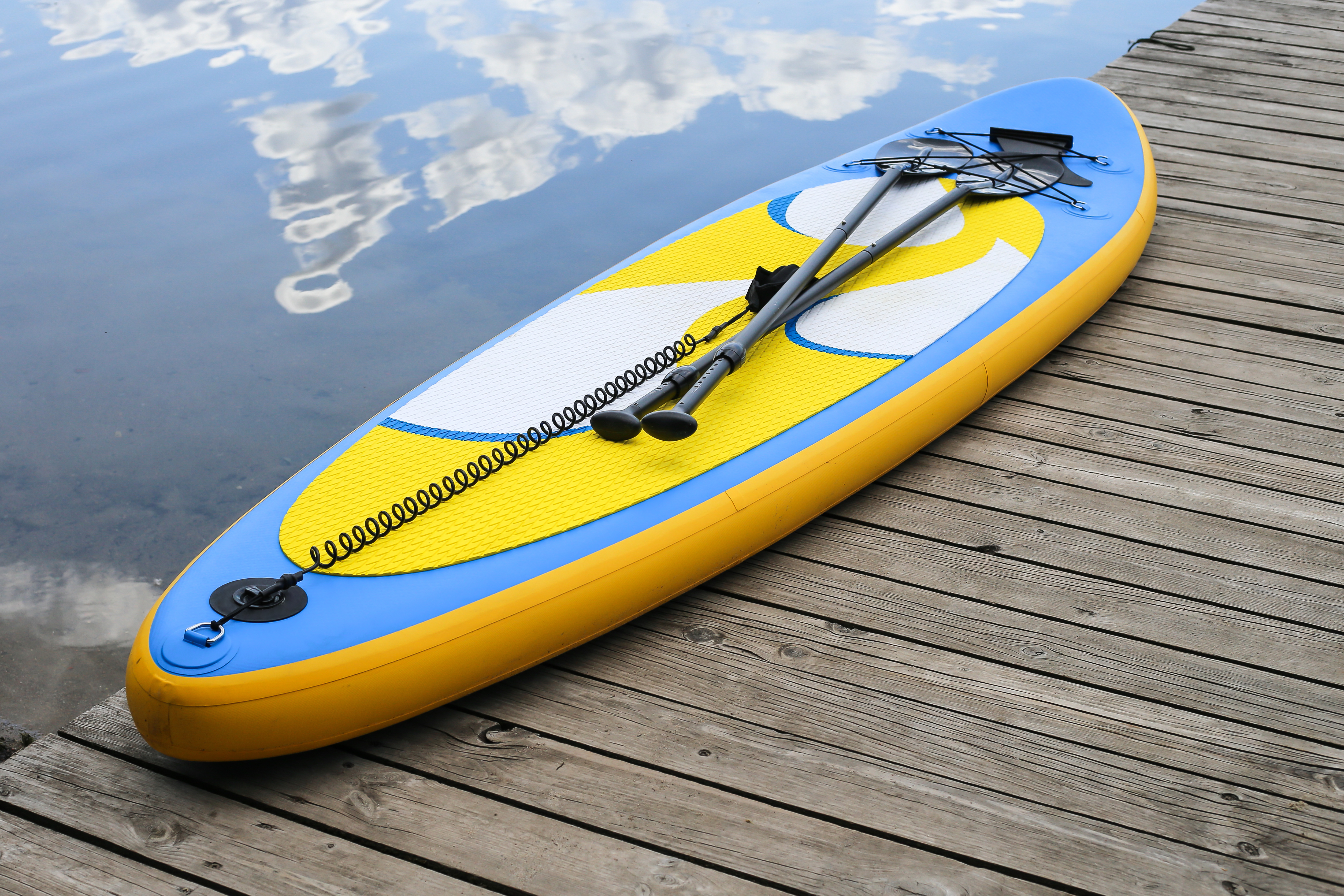
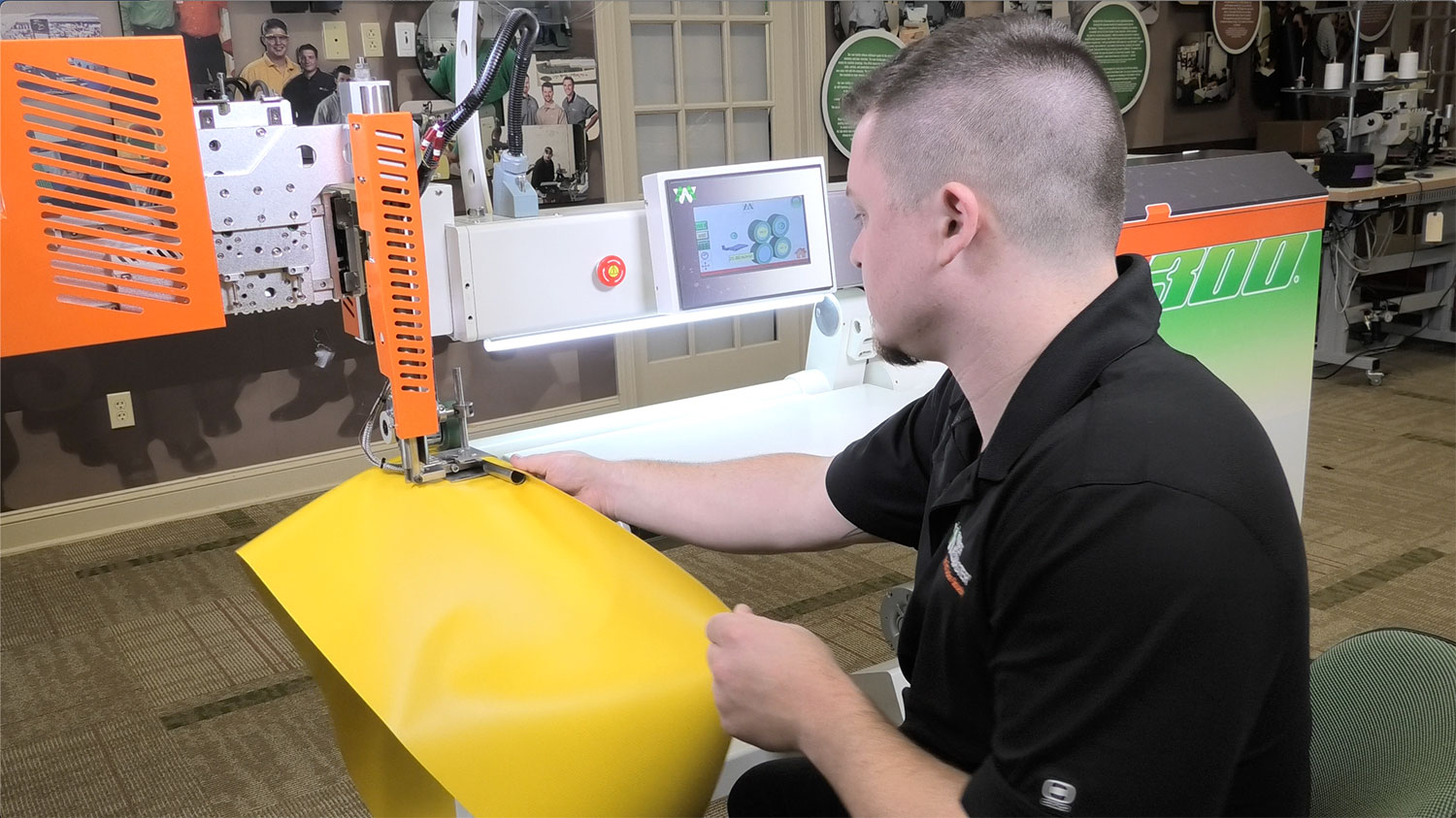
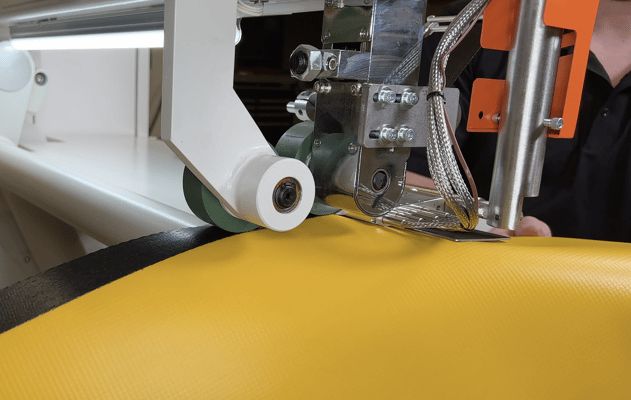
Hot air welding blows heated air between overlapping layers of PVC to melt their surfaces, then pressure rollers fuse them into a watertight seam. It handles curves as well as long seams and is common for tarps, banners, tents, roofing membranes, and inflatables.
Soudage à chaud
Hot wedge welding uses a heated metal wedge between the layers instead of air. Rollers press the melted surfaces together right behind the wedge, which makes it well suited to long, straight seams in liners, covers, and geomembranes.
Soudage par radiofréquence (RF)
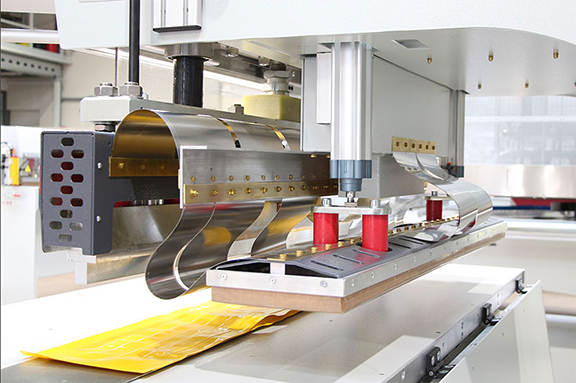
Radio frequency welding, also called high-frequency welding, uses electromagnetic energy to heat PVC from the inside. It produces fast, consistent seams in high-volume production of items like tarpaulins, banners, and industrial curtains.
Guide étape par étape pour réaliser des soudures parfaites en PVC
L'obtention de soudures PVC cohérentes et de haute qualité passe par plusieurs étapes clés, de la préparation au processus de soudage proprement dit. Voici un guide détaillé :
Comment préparer le PVC pour la soudure : Nettoyage et mise en place
Proper preparation of PVC surfaces is essential. Clean, dry, and smooth surfaces are crucial for a strong bond, and an even overlap between the layers is vital for creating strong, leak-free seams. Any contaminants like dirt or grease can prevent proper adhesion and lead to weak welds. Aligning and securing the materials properly ensures that they do not shift during the welding process, maintaining uniformity and strength across the seam.
Maîtriser la température et la vitesse pour des soudures plus solides
The welding temperature must be precisely controlled to suit the type of PVC being welded. Too high a temperature can burn the material, while too low a temperature might not melt it sufficiently to form a strong bond. The speed of the welding process also affects the seam strength and appearance. Optimal adjustments of airflow and pressure settings are crucial for achieving the best results. The right temperature depends on the material, its thickness, seam width, and welding speed. Start from your machine’s material settings and always test on a sample before a full production run.
Prévention et réparation des soudures faibles ou irrégulières
Comprendre les erreurs de soudage les plus courantes, telles que la surchauffe, la vitesse incorrecte et la pression insuffisante, peut aider à les éviter. Pour éviter les fuites, il est essentiel de s'assurer que le joint est propre, correctement aligné et solidement collé. Il est essentiel de procéder à des contrôles réguliers pour déceler tout signe de mauvaise qualité de la soudure, comme des lacunes, des brûlures ou des joints irréguliers. Les techniques visant à renforcer et à tester la solidité des soudures peuvent garantir une durabilité à long terme.
Problèmes courants de soudage du PVC et comment les résoudre
Pourquoi vos soudures en PVC sont-elles défaillantes (et comment y remédier) ?
Identifying and addressing common issues like incorrect temperature settings, improper material alignment, or contamination can drastically reduce the incidence of weld failures. Proper surface preparation and avoiding common mistakes are crucial for a strong weld. Solutions may involve adjusting the welder settings, improving the material handling processes, or redesigning the welding procedure.
Éviter la déformation et la surchauffe des matériaux
Excessive heat can cause PVC to deform, which not only affects the appearance but can also weaken the material structurally. Learning how to modulate the heat application based on the material thickness and type can prevent damage and maintain the integrity of the PVC. Utilizing tools like Miller Weldmaster’s weld test and seam vision systems can help in accurately finding and monitoring seams and welding temperatures, ensuring the optimal heat is applied during the welding process. This not only enhances the quality of the seams but also prevents overheating, preserving the structural and aesthetic qualities of the PVC.
Meilleures pratiques pour l'efficacité du soudage industriel du PVC
Augmenter la vitesse sans compromettre la résistance des soudures
In an industrial setting, efficiency is key. Accurate cutting and consistent overlaps keep seams straight and prevent leaks. Employing techniques that increase the speed of the welding process without affecting the quality of the welds is crucial. Advances in automation and the use of state-of-the-art welding machines can aid in achieving this balance.
Choisir la meilleure méthode de soudage du PVC pour votre application
The selection of welding methods depends largely on the specific application. For instance, hot air welding is suitable for thinner sheets and curved seams, while hot wedge welding may be preferred for thicker sections and long, straight seams. RF welding is often used for waterproofing applications such as tarpaulins and tents.
Where PVC Welding Is Used
- Waterproofing and geomembranes: Welded PVC liners line irrigation canals, ponds, and landfills, and form waterproof barriers in construction. See our geomembrane welding machines.
- Tents and tarps: PVC welding produces tent sidewall panels, keder, hems with grommets, and tent tops, as well as tear-resistant tarpaulins. Explore our tent welding machines.
- Custom fabrication and prototyping: Welding makes it fast to prototype new designs and build custom parts. At a Miller Weldmaster Design Day, you can work with our technicians at our facility to develop and test prototypes. If you can’t visit, send us samples of your material and we’ll test which welding method works best.
- Mass production: Automated PVC welding lines keep weld quality consistent across thousands of units and scale from small batches to large runs.
Choosing PVC Welding Equipment
The right PVC welding machine depends on what you make, the materials you weld, and how much you produce.
Types of PVC Welding Machines
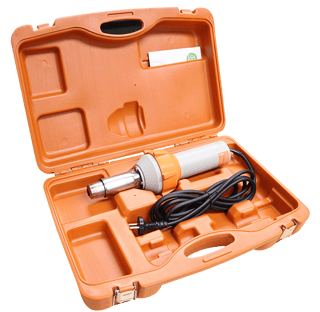
- Hand tools: Portable hot air welders for detail work, repairs, and installation in the field, such as the EliteAir hand tool.
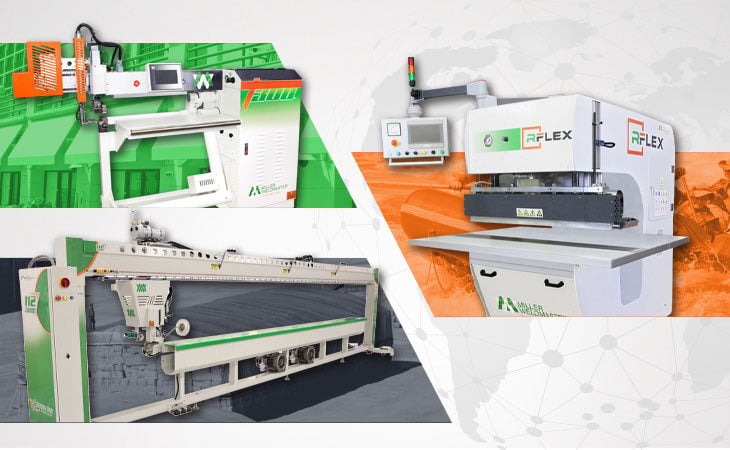
- Stationary machines: Hot air, hot wedge, and RF welders for production work on the shop floor.
- Automated systems: Machines with unwinds, rewinds, and material handling for high-volume, consistent output.
Features to Look For
- Automation: Reduces errors, cuts labor costs, and speeds up production.
- Material compatibility: The machine should match the type and thickness of your PVC. Test sample materials before you buy.
- Adjustable settings: Seam width, temperature, speed, and pressure you can set for each material.
- Room to grow: Modular designs that let you add features as production grows.
Questions to Ask Before You Buy
- What production volume do you expect?
- What seam types and lengths do your products need?
- Are there industry standards your products must meet?
- Will the machine fit your current workflow?
Mistakes to Avoid
- Underestimating production needs: A machine with too little capacity can hold back growth.
- Choosing on price alone: Lower-priced equipment may lack features you need.
- Skipping training: Operator training is essential for consistent welds.
- Picking the wrong method: The welding method should match your material and seam.
Comment Miller Weldmaster vous aide à réaliser des soudures PVC parfaites
Miller Weldmaster, leader dans l'industrie du soudage, fournit des solutions de soudage PVC de premier ordre qui améliorent à la fois l'efficacité et la qualité des soudures. Nos machines sont conçues pour fournir des soudures solides et cohérentes et sont soutenues par des décennies d'innovation et une compréhension approfondie de l'industrie du soudage.
Machines à souder le PVC Miller Weldmasterà la pointe de l'industrie
Notre gamme de machines à souder comprend des options adaptées aux différentes applications du PVC, garantissant précision et durabilité. Nous proposons des solutions personnalisables qui peuvent s'adapter à différentes échelles opérationnelles et à différents besoins, des petits ateliers aux grandes opérations industrielles.
Pourquoi choisir Miller Weldmaster pour vos besoins en soudage de PVC ?
Avec des années d'expertise dans l'industrie, des équipements fiables et des services d'assistance et de formation dédiés, Miller Weldmaster est votre partenaire idéal pour réaliser des soudures PVC impeccables. Les succès de nos clients reflètent notre engagement pour l'excellence et l'innovation dans la technologie du soudage.
Not sure which machine fits your PVC products? Talk to a Miller Weldmaster expert, or send us a sample and we’ll test it on our machines.
Guides connexes
- Why PVC Laminated Fabric Is the Best for Tent Welding
- Soudage à haute fréquence du PVC
- Qu'est-ce que le soudage à l'air chaud ?
En comprenant les principes, les meilleures pratiques et les pièges potentiels du soudage du PVC, vous pouvez réaliser des soudures parfaites qui sont solides, durables et esthétiques, garantissant ainsi la longévité et la fonctionnalité de vos produits à base de PVC.